My aunt has a Kanjivaram saree she bought in 1987. Dark wine silk, gold zari border, temple motifs running the full length of the pallu. She wore it to her wedding, to her daughter’s naming ceremony, and last Diwali also. Three occasions across four decades and it looked right every single time.
That kind of staying power is exactly why South Indian Saree styles are seeing a genuine revival in 2026 not a trend pushed by fast fashion, but more like a quiet return driven by women who feel tired of buying things that go out of style before the year end. They want the real thing now. Handwoven. Meaningful. Something built to last long.
This guide focuses on what’s actually being worn and purchased this year, the sarees that are moving from shelves, the colours women are liking more, and the styling shifts which are worth noticing.
Why Women Are Coming Back to Traditional Weaves
A few years ago the conversation was mostly about fusion sarees with belts, pre-stitched drapes, and unusual blouse cuts. That phase is still there but something has changed slowly under it.
Women who bought many mass produced synthetic sarees are asking different questions now. Where was this made? Who actually wove it. What fabric is really used. This is not only ideal thinking it is becoming a real purchasing pattern. Handwoven sarees from Tamil Nadu, Andhra Pradesh and Kerala are seeing good demand growth especially buyers between age 28 to 45.
Social media also played some role but not exactly the way people think. It is not only celebrities promoting it. Many regular women posting photos of their grandmother sarees, unboxing videos from weavers cooperative, and styling reels showing simple cotton Chettinad saree worn for work then again for dinner. That kind of natural beauty feels more real than fashion editorials.
Wedding fashion is another reason. Brides are now slowly moving away from identical lehenga trends and choosing silk sarees instead especially for day ceremonies, temple rituals and receptions where a South Indian Saree feels more personal.
Must Have South Indian Saree Styles
Kanjivaram Silk Still the One Everyone Comes Back To
Kanjivaram silk is woven in Kanchipuram Tamil Nadu using mulberry silk threads that are interlocked at the border not just stitched on. This one construction detail is what makes the border strong and also why these sarees last many decades. You can feel the difference when you touch it.
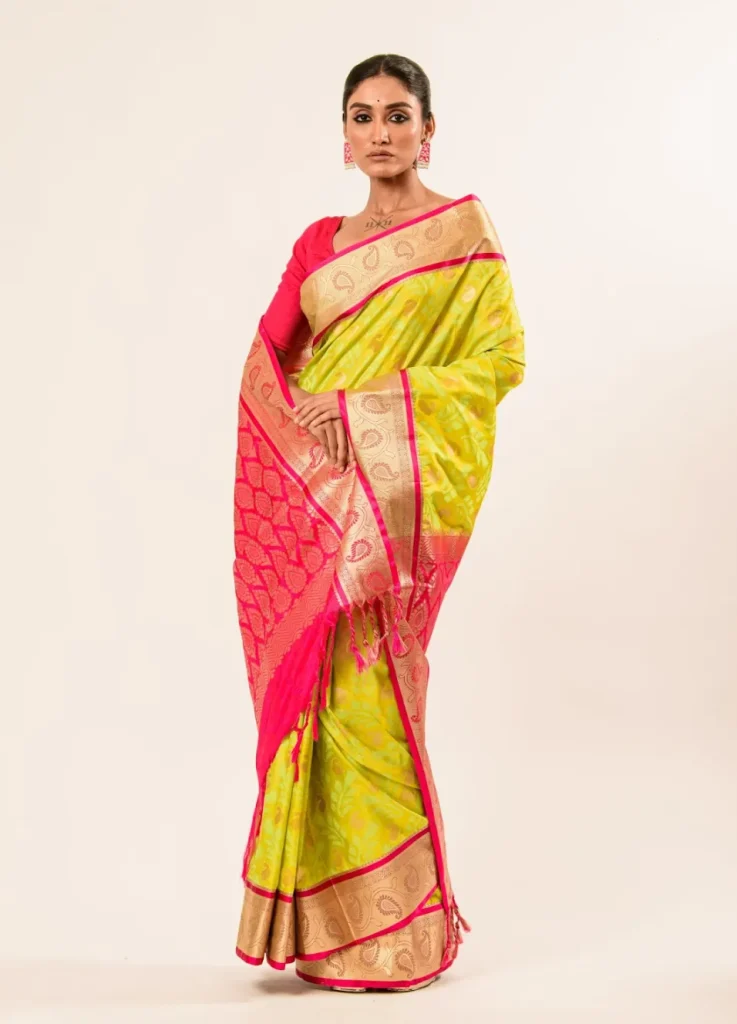
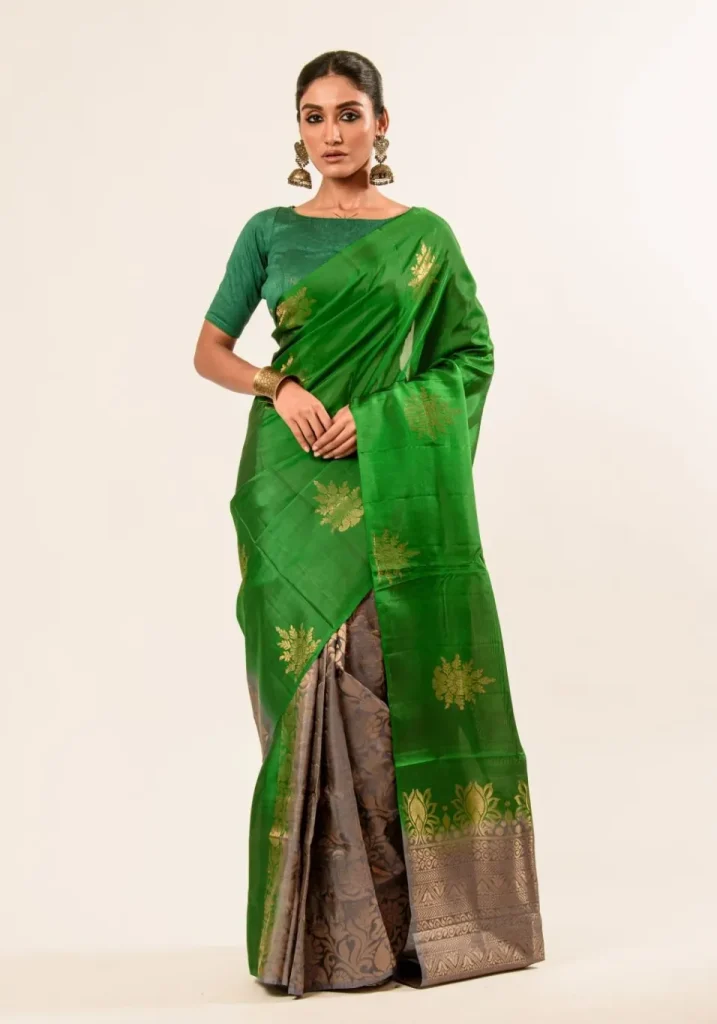
In 2026 the most wanted styles are dual tone Kanjivarams where the body and border come in different silk colours. Emerald Green Saree with gold zari, deep burgundy with antique rose borders and peacock blue with copper zari are all strong choices this year. Temple motifs, gopuram patterns, rudraksha borders and elephant designs along the pallu are especially liked by brides who want their South Indian Saree to tell a story.
One styling change is also visible to younger buyers now pairing heavy Kanjivarams with minimal gold jewellery instead of full traditional sets. One temple necklace, small jhumkas and clean hair. The saree itself does the talking.
Chettinad Cotton The Everyday Saree That Refuses to Be Boring
If Kanjivaram is the saree for celebrations Chettinad cotton is the one women actually live in daily. Woven in Chettinad region of Tamil Nadu these sarees are known for bold checks, wide stripes and strong contrast borders combinations like mustard and maroon black and brick red or parrot Green Saree with white checks which look intentional not loud.
What makes them really practical is the cotton fabric. In South Indian summers and honestly most of the year a saree you can breathe in matters a lot. Women wear Chettinad cottons to office college temple visits and casual gatherings without thinking much.
The colour combinations trending this year look slightly bolder than last year. Navy with burnt orange forest Green Saree with cream and deep plum with gold borders appear very often. Blouse choices also do good work here: a solid blouse in the border colour easily pulls the whole look together.
Pochampally Ikat When the Pattern Is the Point
Pochampally Ikat sarees from Telangana are made with a resist dyeing method where threads are tied and dyed before weaving. Because the dye spreads little at edges, each geometric pattern has a soft blur which is actually the identity of the weave, not a mistake. No two sarees come exactly the same.
This year silk cotton blend versions are getting more interest. They give richness of silk but comfort of cotton so women can wear them in many situations. Colour wise jewel tones dominating emerald Green Saree, deep teal, navy and burnt orange.
Pochampally sarees also attract buyers who want something artistic but not as formal as heavy silk. They work well for cultural events, art evenings and travel where a South Indian Saree look feels thoughtful but not stiff.
Kerala Kasavu The Saree That Looks Best When It Looks Simple
Kerala Kasavu sarees are traditionally woven in cream or off white cotton with gold zari border that is almost the entire design. This simplicity is exactly why they look so striking.
They are worn during Onam and Vishu traditionally but now also appearing at other formal South Indian occasions. Modern styling also changed the look coloured blouses like deep Green Saree shade rust or navy giving different energy to the saree while still keeping its character.
For women who feel heavy wedding sarees too overwhelming, a Kasavu in thicker cotton or tissue silk becomes an elegant option formal enough but comfortable for long hours.
Uppada and Venkatgiri Silk Silk Without the Weight
Both Uppada and Venkatgiri sarees come from Andhra Pradesh and they share one quality: they are woven using jamdani techniques creating fabric much lighter than normal silk. Anyone who wore heavy Kanjivaram for many hours at a wedding will understand why lighter South Indian Saree options are becoming popular.
The weaving creates small zari motifs, floral sprigs, delicate butis and thin borders appearing almost transparent against silk base. Colours trending this year include bottle Green Saree, dusty rose ivory with gold and antique blue.
They are not trying to compete with Kanjivaram for grandeur; they do something quieter looking refined but feeling very light.
The Colour Story for 2026
Green is clearly the strongest colour trend this year.
And especially deeper richer greens, not bright neon tones. Green Saree with gold zari borders are appearing at many South Indian weddings now. Bottle Green Saree with an antique gold border feels serious and perfect for temple ceremonies. Parrot Green Saree brighter and festive mostly used in cotton and silk cotton sarees for day events.
Other colours still remain classic crimson red with gold royal blue with silver zari deep magenta with contrast borders. These are not new colours; they simply always work well.
What is new is softer pastel shades appearing in silk sarees. Blush pink tissue silk lavender Uppada powder blue Kanjivaram these shades are being chosen for receptions and smaller functions where heavy bridal saree feel too much.
What to Look for When You Buy
The online market for South Indian Saree shopping has grown a lot and many sellers are also passing machine made sarees as handwoven originals. Some things are important to check.
The weight and drape of authentic Kanjivaram silk is heavy. If silk saree feels too light like polyester it probably is. Lightweight styles like Uppada are lighter but still have a cool smooth touch.
Zari quality Real gold or silver zari have softer shine while fake zari look too bright and uniform. Some sellers say semi silk or art silk which usually means polyester.
Border construction in Kanjivaram Border threads should interlock with body threads not stitched separately. You can check it from the backside of the saree.
Curated collections like Anvi Couture offer handwoven pieces including Kanjivaram cotton blends Gadwal sarees and Ikat silks which makes buying easier without checking every small detail.
A Last Thought
South Indian Saree styles are not trending because someone decided they should. They are trending because women again started buying things that actually mean something.
A handwoven Kanjivaram or Chettinad cotton carries years of weaving skill and tradition. That value is felt when wearing it and also when passing it to the next generation.Whether you are dressing for a wedding festival or even a simple weekday when you just want to wear something beautiful there is always a South Indian Saree made for that moment. You only need to know which one to choose.